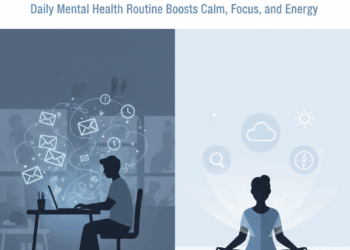
In a world where responsibilities keep on piling up and time seems to be increasingly scarce, most adults struggle to keep their emotions balanced and their minds clear. Pressurized jobs, personal obligations, and the constant digital stimulation usually render a person overwhelmed, anxious, and mentally spent. Fortunately, improving emotional stability does not always require major lifestyle changes. The simple, consistent mental health routine here can easily reduce anxiety and restore a sense of control with only 10 minutes a day.
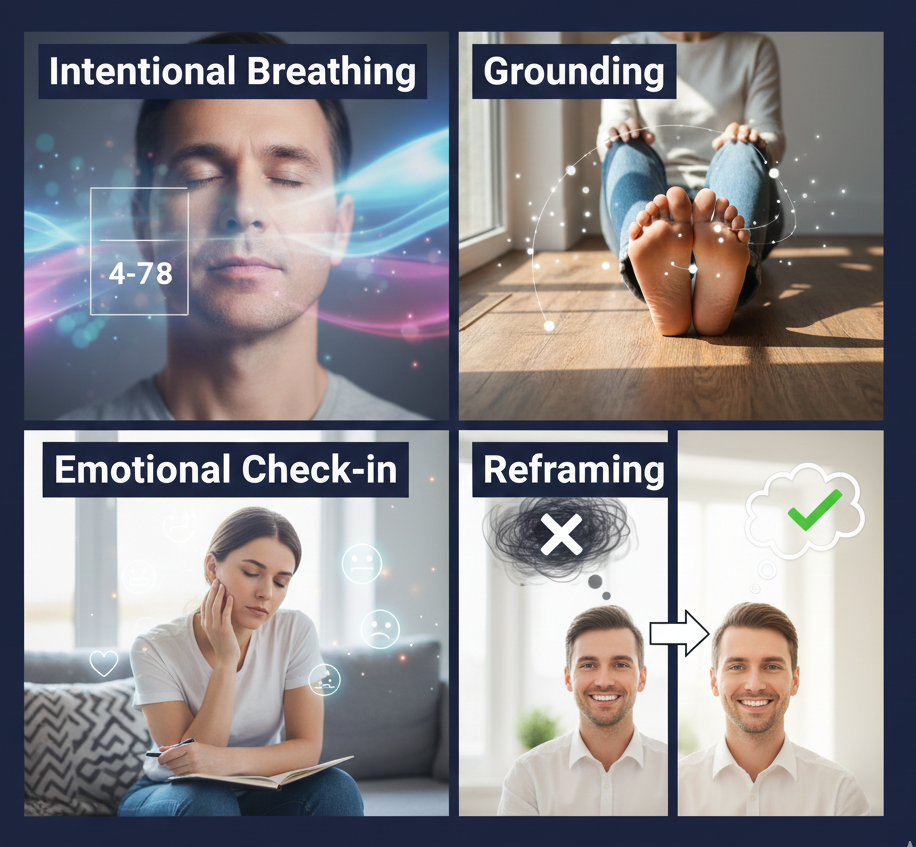
Calming the Mind Through Intentional Breathing
Intentional breathing is the root of this routine. Among the most effective methods for calming the nervous system are a few slow, structured breaths. Box breathing, 4-7-8 breathing, or even two minutes of deep diaphragmatic breaths stimulate the parasympathetic nervous response, which, in turn, reduces heart rate, relaxes muscles, and tells the brain to shift gears from stressed to relaxed. If you have a high-pressure or very variable workload, this becomes a very strong way to regain that inner stability.
Grounding Techniques to Bring the Mind Back to the Present
Another crucial element to include in this 10-minute process is grounding. People experience high levels of stress because, quite simply, their mind is racing, jumping quickly from tasks, concerns, and obligations to others. Grounding techniques-such as paying attention to surroundings, paying attention to bodily sensations, or doing a brief body scan-bring the person back to the present moment. This not only reduces anxiety but also brings about greater focus and mental clarity. Even two or three minutes of such grounding can make daily stressors feel far less overwhelming.
Emotional Check-In: Understanding and Processing Feelings
The routine also pushes for a short period of emotional check-in, which means recognizing how you feel and not judging yourself for it. A lot of people build up stress because they hold frustration, fatigue, or fear during the day. The time it takes to identify emotions allows your brain to process these emotions much better. This habit builds emotional resilience, strengthens self-awareness, and prevents feelings from growing into larger sources of anxiety.
Besides breathing and grounding, it could also be a simple exercise in reframing. When people experience high levels of stress, they easily get stuck in overthinking or previewing worst-case scenarios. It takes only one minute to rewrite a negative thought into a more balanced or realistic perspective, which helps decrease cognitive overload. If this is done regularly, rewiring occurs, which shapes an adaptive and optimistic mindset.
Reframing Negative Thoughts for a Healthier Mindset
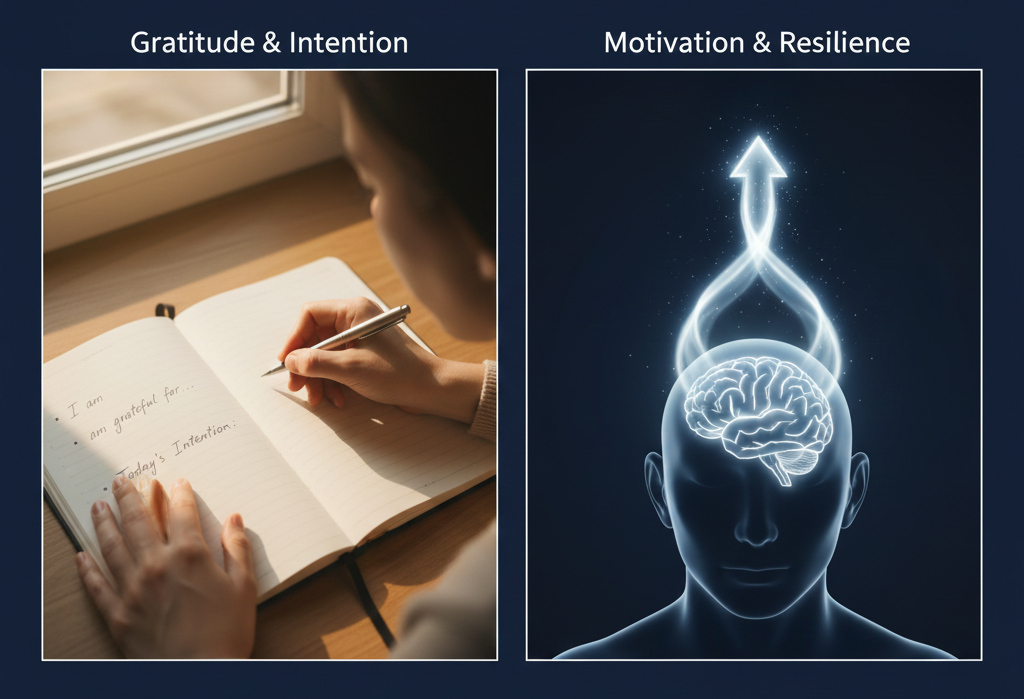
A short gratitude or intention practice at the end of the routine brings the mind to a calmer and more positive state. Writing down one thing you are grateful for or setting a clear intention for the next few hours brings the focus from stress to clarity. This final step helps generate motivation, strengthens mental discipline, and enhances long-term emotional well-being.
Conclusion: The Power of a Consistent 10-Minute Routine
These techniques may sound simple, but their symbiotic effect is powerful. Consistency matters, not duration; as little as 10 minutes done each day can reduce anxiety levels and elevate mood while rebuilding mental stability. For those subject to life’s intense pressures, this routine is one of the few achievable and highly effective methods of regaining control over their mental well-being. After all, it is not about removing challenges but rather about learning to navigate them with a more grounded and calm mind. With a daily 10-minute mental health routine, no matter how busy or overwhelming life gets, everyone can learn to become more resilient, less anxious, and emotionally healthier.